 blog
Food Packaging and Labeling Services: 7 Top Picks for 2026
Table of Contents
- What Food Packaging and Labeling Services Actually Cover
- 7 Food Packaging and Labeling Services Ranked for 2026
- Food Labeling Requirements Every Brand Must Meet
- Food Packaging Types and Which One Fits Your Product
- What Drives Food Packaging Cost (and How to Budget)
- Why Food Co-Packing Services Beat Managing Multiple Vendors
- How to Choose a Food Packaging and Labeling Partner
- Frequently Asked Questions
Last Updated: October 21, 2026
What Food Packaging and Labeling Services Actually Cover
Food packaging and labeling services is the outsourced work of turning a finished food product into a retail-ready unit: filling, sealing, applying labels, and printing the information regulators and shoppers expect. At Northridge Industries, we run that work as an extension of a brand's own manufacturing department, consolidating blending, freeze-drying, and packaging under one roof.
The scope is wider than most buyers assume. A full-service provider typically handles:
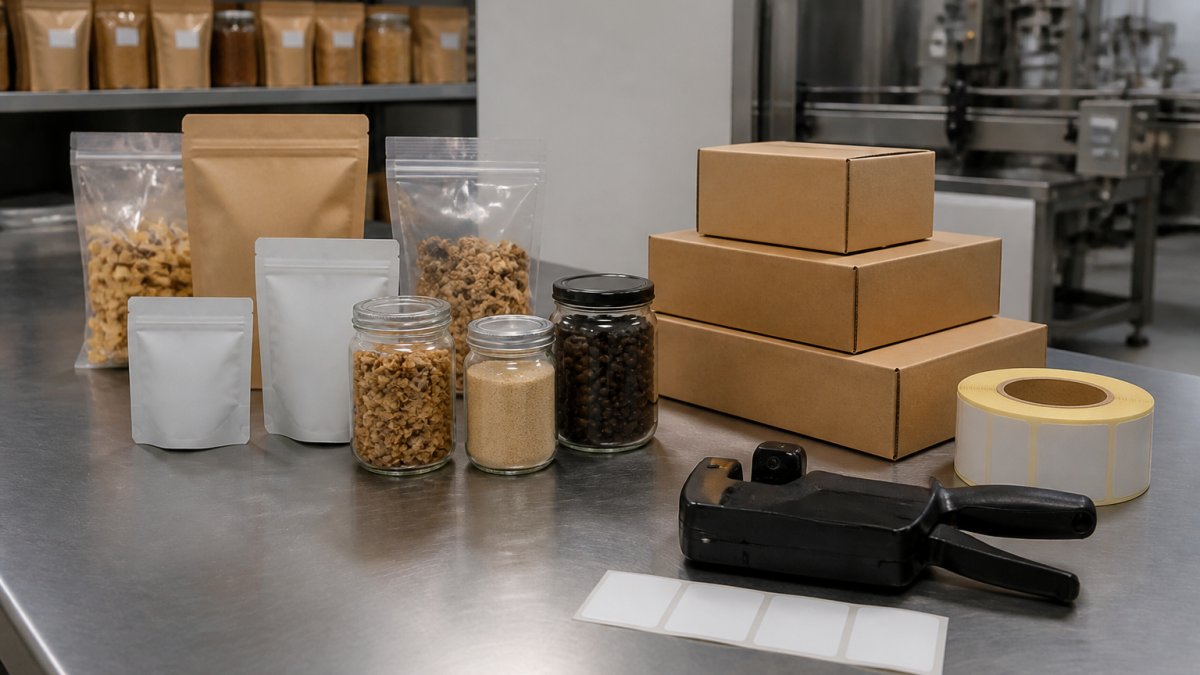
- Primary packaging: pouches, jars, bags, and boxes filled and sealed on automated lines
- Label printing and application, including roll labels and multi-column rolls
- Ingredient sourcing and dry blending before the fill
- Lot coding, traceability records, and quality checks
- Retail-ready case packing for distributors and grocery buyers
Most brands start by shopping for label printing alone, then discover the label is the last step in a chain. Get the fill wrong and the best label in the market cannot save the batch.
Below, we break down seven service models, what each costs you in time and money, and the selection criteria that separate a partner from a vendor.
7 Food Packaging and Labeling Services Ranked for 2026
The best food packaging and labeling service for most growing brands is a consolidated co-packer that handles blending, filling, and labeling in one facility.
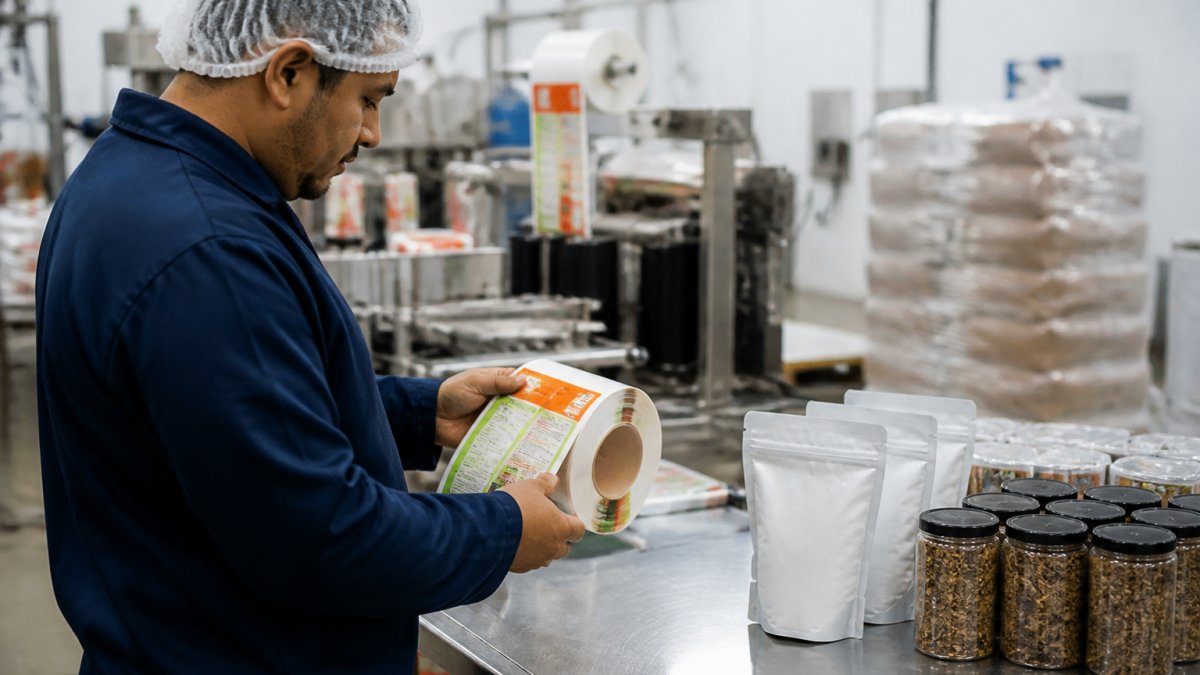
Here are the seven service models, ranked by how much supply chain they remove from your plate.
1. Full-service co-packing (our top pick). One facility takes raw ingredients through blending, freeze-drying, filling, sealing, labeling, and case packing. Northridge Industries runs this model from our facility, with confidential formula handling and batch-to-batch records.
2. Dry blending and packaging specialists. Strong for spice, seasoning, and powder brands. Weaker if you also need freeze-drying or retail case packing.
3. Label printers and converters. Excellent print quality and material choice, but they do not fill a pouch. You still need a separate packer.
4. Pouch and bag converters. Supply the film and the bag. Useful for high-volume buyers with in-house filling equipment.
5. Repackers for importers. Take bulk shipments and convert them into retail units with compliant labels. Essential for international trading companies.
6. Private label packaging providers. Build store-brand packaging for grocery chains and retail buyers, usually at higher minimums.
7. Freelance label designers plus a local printer. The cheapest route and the one that produces the most compliance errors.
How We Evaluated These Providers
We scored each model on four criteria: how many vendors it removes from your supply chain, whether it handles food-safe and compliant materials, how it scales from low minimums to production volume, and whether it provides traceability records you can hand to a buyer.
Food Labeling Requirements Every Brand Must Meet
Every food label sold in the U.S. must carry a statement of identity, net quantity, ingredient list, allergen declaration, and nutrition information, with the format set by the FDA food labeling guidance. The FDA also requires that nutrition claims and health claims meet defined criteria before they appear on pack.
Three details trip up growing brands most often:
- Allergen callouts. The nine major allergens must be declared in plain language, either in the ingredient list or a separate "Contains" statement.
- Net quantity placement. It belongs in the lower third of the principal display panel, in the correct units.
- Ingredient order. Ingredients are listed by descending weight, which means a reformulation usually forces a label reprint.
A co-packer with in-house labeling control can help catch these before the press runs.
Food Packaging Types and Which One Fits Your Product
The right food packaging type depends on three things: the product's moisture and fat content, how it will be stored, and how it will be displayed.
| Packaging Type | Best For | Key Material Consideration | Performance Check |
|---|---|---|---|
| Stand-up pouches | Snacks, powders, coffee, candy | High-barrier film with a resealable zipper | Oxygen and moisture transmission through the film; zipper integrity after repeated opening |
| Jars and bottles | Spices, sauces, bottled beverages | Glass for premium, PET for lighter shipping | Seal integrity and headspace; light exposure for oils and spices |
| Bags and gusseted bags | Bulk dry goods, grains, frozen items | Freezer-safe laminates for frozen lines | Adhesive and film performance at freezer temperatures; puncture resistance in transit |
| Bakery boxes | Baked goods, specialty foods, gift sets | Grease-resistant board and food-safe coatings | Grease bleed-through and coating migration at the food-contact surface |
| Multi-column roll labels | High-volume automated lines | Consistent die cuts for fast application | Die-cut tolerance and web tension on high-speed applicators |
Two material decisions matter more than the rest. Waterproof and moisture-resistant labels are essential for anything chilled, frozen, or stored in humid conditions. Grease-resistant materials matter for bakery and fried or oily snack products, where standard paper stock will bleed and lift.
Freezer-safe labeling deserves its own check. Adhesive that performs at room temperature can fail at freezer temperatures, leaving labels curled or detached by the time a shopper picks the product up.
Request a Manufacturing Quote →
Performance and shelf-life testing. Before you commit a production run to a format, ask for a sample stored under your actual distribution conditions: refrigerated, frozen, humid, or exposed to oils and abrasion in transit. Confirm who pays for the test and whether the results are documented for your buyer.
Regulatory review by format. The format changes what the label must say and where. A jar or bottle has a defined principal display panel and a lower-third net quantity area; a stand-up pouch with a curved or gusseted surface can make net quantity placement and ingredient legibility harder to satisfy.
What Drives Food Packaging Cost (and How to Budget)
Food packaging cost is driven by five variables: order quantity, material choice, label complexity, fill format, and how many vendors touch the product. Pricing depends on quantity, dates, and delivery.
Most quotes you receive will bundle some combination of the following line items. Ask for each one separately so you can compare apples to apples:
- Setup and prepress. Plate charges, die creation for custom label shapes, and prepress proofing are usually one-time costs per SKU. A new die or plate is a fixed charge you pay again if the artwork or shape changes.
- Material and substrate. Film, board, glass, and PET are priced per unit but move with resin and paper markets, so a quote has a shelf life. High-barrier laminates and freezer-grade adhesives cost more than standard paper stock.
- Print process and colors. Digital short runs avoid plate charges but carry a higher per-unit cost; flexo or offset spreads setup across volume and lowers unit cost as quantity climbs. Each additional spot color or finish adds a pass.
- Fill and packaging labor. Filling, sealing, lot coding, and case packing are priced per unit or per hour depending on the line. Manual or semi-automatic lines cost more per unit at low volume than automated lines at high volume.
- Freight and warehousing. Inbound ingredients, outbound cases, and any storage between production runs are separate charges. Three vendors means three sets of freight and three lead times.
- Compliance and testing. Allergen verification, nutrition analysis, and material migration or shelf-life testing may be quoted as add-ons. Confirm whether they are included before you compare totals.
Volume breaks and minimums. Most providers tier pricing by quantity, with the steepest per-unit drop between the first and second tier. Low minimum order quantities usually carry a higher per-unit price because setup costs are spread across fewer units. Ask each candidate for their tier breakpoints in writing so you can model your first run, a reorder, and a scaled run.
How to compare quotes. Normalize every quote to a landed cost per finished unit: material plus print plus fill plus freight plus any setup amortized over the order. Then compare lead time and rework risk alongside price. A quote that is lower per label but requires a separate packer, a second freight leg, and a longer combined lead time is rarely the lower total.
Budget the total chain, not the line items. A brand paying three vendors is also paying for three sets of freight, three lead times, and the staff hours spent coordinating them.
Order quantities and low minimums are the other lever. Emerging brands need a partner willing to run smaller batches while they test a market, then scale without a re-qualification process.
Compare landed cost, lead time, and rework risk across the whole chain before you sign.
Why Food Co-Packing Services Beat Managing Multiple Vendors
Food co-packing services win on accountability. When one facility blends, fills, and labels, a batch problem has one owner instead of three vendors pointing at each other. That is the practical case for consolidation.
The protection is a partner with documented quality and traceability systems, clear production records, and the capacity to grow with you. Ask any candidate how they handle a bad batch before you need to know.
How to Choose a Food Packaging and Labeling Partner
Choose a partner that can prove four things: food-safe and compliant materials, batch-to-batch consistency, traceability records that talk to your systems, and capacity to scale. Everything else is a preference.
Use this checklist before you request quotes:
- Can they show food-safe and non-toxic material certifications for every substrate they run?
- Do they provide batch records and quality checks for each production run?
- What are their minimum order quantities, and how do those change as you scale?
- Do they handle freeze-drying, blending, and filling in-house, or broker it out?
- How do they protect proprietary formulas, and can they document it?
- What is the process when a batch fails a quality check?
- Does their traceability system export cleanly to your ERP?
- Can they quote without a long-term contract?
A provider that cannot document formula confidentiality in writing is a risk, not a bargain. Ask for the policy before you share a spec sheet.
Match the material to the product's real storage conditions rather than the recycling logo.
Frequently Asked Questions
What do food packaging and labeling services include?
Most providers bundle four things: sourcing packaging materials (bags, pouches, jars, boxes), filling and sealing your product, printing and applying custom labels, and handling compliance details like nutrition panels and allergen statements. Full-service co-packers also manage ingredient sourcing, blending, and freeze-drying under one roof, which cuts the number of vendors you coordinate. Ask each provider whether label design, plate or digital setup, and regulatory review are included or billed separately, since that changes the real food packaging cost.
How much do food packaging and labeling services cost?
Pricing depends on order quantity, packaging format, label material, and turnaround time, so there is no single rate. Costs usually break into three buckets: packaging materials, the fill-and-seal run, and label printing plus application. Low minimums raise the per-unit price; larger runs spread setup costs across more units. Request itemized quotes from at least three providers and compare total landed cost, not just the per-unit figure, before you commit.
Can a co-packer help with food labeling requirements?
Yes, and it is one of the strongest reasons to use one. Reputable co-packers review your label against FDA requirements for the Nutrition Facts panel, ingredient statements, allergen declarations, net quantity, and country of origin before anything prints. They also flag claims that need substantiation. You remain responsible for label accuracy, but a partner with a documented review process catches errors before a print run, which is far cheaper than a recall or relabel.
What is the difference between a co-packer and a contract manufacturer?
A co-packer takes your finished or semi-finished product and packages it: filling pouches, sealing jars, applying labels. A contract manufacturer makes the product itself, handling blending, cooking, or freeze-drying before packaging. Many established providers do both, which is why consolidation matters. If you currently buy ingredients, blend at one vendor, and package at another, a single partner covering all three reduces handoffs, shortens lead times, and gives you one traceability record instead of three.
Consolidating your supply chain is a decision about accountability, not just cost. If you are tired of coordinating sourcing, blending, and packaging across separate vendors, Northridge Industries runs all three under one roof, with confidential formula handling, scalable production volumes, and clear production and quality records on every batch. Request a manufacturing quote and we will walk your spec through the whole chain.